Systems That Work for Everyone
Better outcomes rarely happen by accident. If we want systems to work better for everyone, we have to design them that way.
When I think about equity, I don’t think of it as a destination we someday arrive at.
I think about design.
Every system we interact with—healthcare, education, transportation, public services, technology, workplaces, communities—has been shaped by decisions. Someone determined how the system would work, what would be prioritized, how resources would flow, what success would look like, and whose needs would be considered.
Sometimes those decisions produce extraordinary outcomes.
Sometimes they create barriers.
And sometimes the people most affected by those barriers are the least involved in designing the system around them.
That is why equity should not be something we evaluate only after a system, service, or policy has been created.
It should be considered in the design itself.
If systems were designed, they can be redesigned
Systems are not neutral simply because they already exist.
They reflect choices—some intentional, some inherited, and some so deeply embedded that we may no longer recognize them as choices at all.
That matters because a system can work exactly as designed and still produce very different experiences and outcomes for different people.
The opportunity is not simply to ask:
How do we make this existing system more equitable?
Sometimes the more important questions are:
Who was this system designed around?
Whose needs were assumed?
Who experiences the greatest friction?
Who benefits from the way it currently works?
And what would we design differently if we started with the experiences of the people most affected?
Changing the questions can change what we see.
And what we see changes what becomes possible.
Start with people, not assumptions
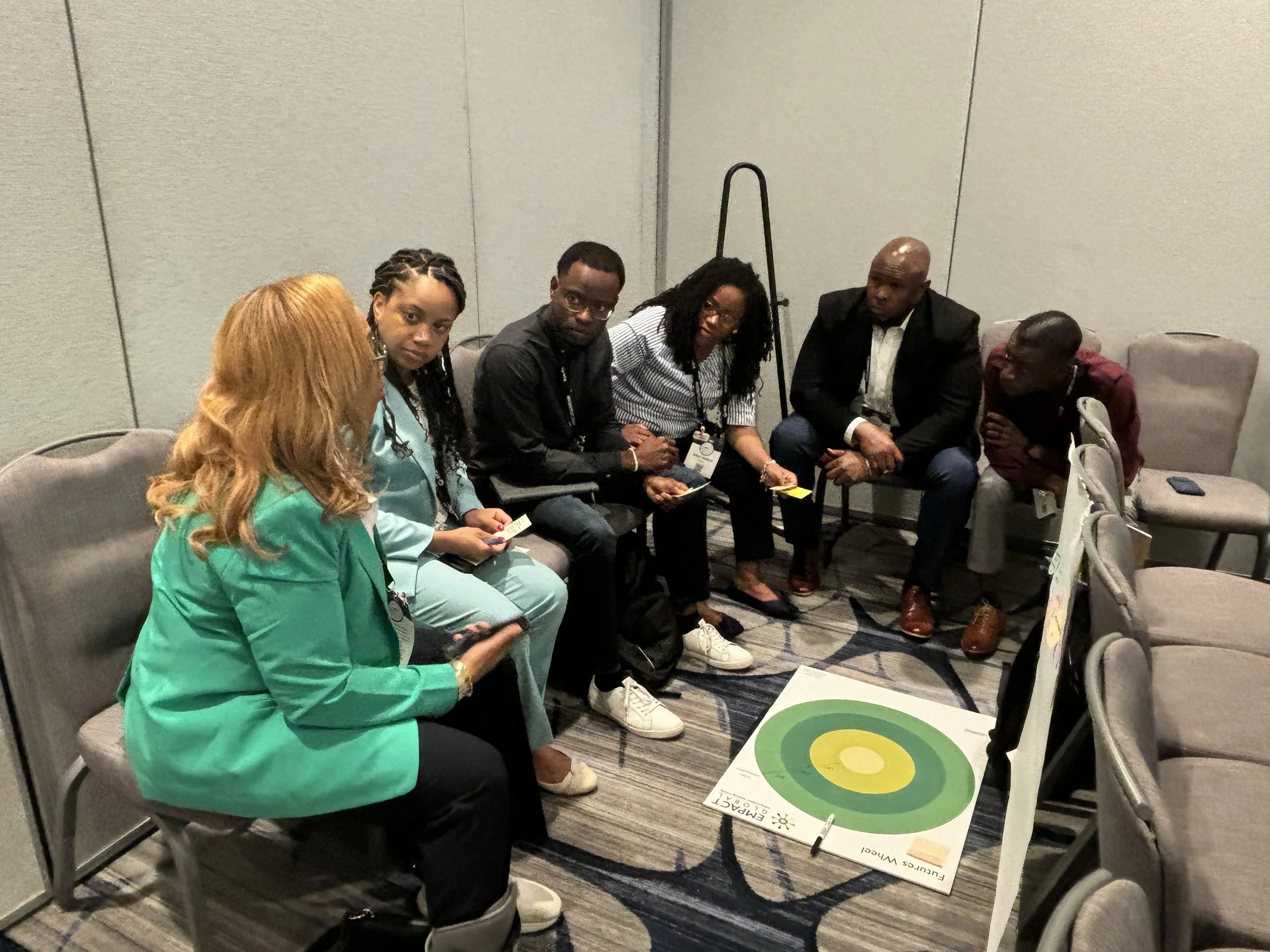
Human-centered design starts with understanding people—their experiences, needs, behaviors, frustrations, aspirations, and environments.
But truly designing with people requires more than asking for feedback after most of the important decisions have already been made.
It means involving people in understanding the challenge.
It means recognizing lived experience as a form of expertise.
It means creating space for perspectives that institutions may not naturally see.
And it means being willing to discover that the problem we thought we needed to solve may not be the problem people are actually experiencing.
At Empact Global, this is one reason we look at people and systems together.
A person’s experience rarely exists independently of the structures around them.
Policies matter.
Processes matter.
Resources matter.
History matters.
Power matters.
Physical environments matter.
Technology matters.
And the relationships between all of those things matter.
Understanding the experience without understanding the system can leave us treating symptoms.
Understanding the system without understanding the people inside it can leave us designing solutions that look good on paper but fail in practice.
We need both.
What might we design differently?
Imagine a healthcare system in which the quality of care someone receives is not shaped by where they live, what they earn, or whether they understand how to navigate a complicated system.
Imagine schools designed around the reality that students do not all arrive with the same needs, resources, experiences, or ways of learning.

Imagine communities where access to safe housing, healthy food, transportation, economic opportunity, and supportive services is treated as part of the infrastructure that helps people thrive.
These possibilities require more than improving isolated programs.
They require us to look at the conditions producing the outcomes.
Strategic foresight can help us ask how those conditions may change.
Systems thinking can help us understand the structures and relationships reinforcing them.
Human-centered design can help us understand how people actually experience them.
And improvement disciplines can help us turn what we learn into changes that work in the real world.
The methodology is not the point.
The point is designing intentionally for the outcomes we want to create.
The future is being designed now
Design does more than shape today’s experience.
The choices we make today influence what becomes normal tomorrow.
New technologies are being developed.
Policies are being written.
Services are being redesigned.
Infrastructure is being built.
Artificial intelligence is increasingly influencing decisions and experiences.
Organizations are preparing for futures that do not yet exist.
Every one of those decisions carries assumptions about people, access, opportunity, behavior, and value.
That makes equity a future question as much as a present one.
Instead of waiting to discover who a new system leaves behind, we can ask earlier:
Who could benefit from this future?
Who could be harmed?
What assumptions are we carrying forward?
Whose perspective is missing?
What would have to be true for more people to thrive?
Those questions do not guarantee perfect outcomes.
They help us make more intentional choices.
This is personal for me
My interest in this work is not purely academic.
I move through the world as a Black woman, an engineer, a systems thinker, a business owner, and a mother.
I know what it feels like to enter environments where people did not necessarily expect someone like me to be there.
I have also seen what becomes possible when people question assumptions about who belongs, who contributes, who leads, and whose ideas matter.
As a mother, those questions become even more important.
I want my daughters—and other children growing up alongside them—to inherit systems that create more possibility, not systems that require them to continually overcome barriers that could have been designed differently in the first place.
That belief shapes how I approach this work.
Not because every challenge is fundamentally an equity problem.
But because every system produces consequences for people.
Good design requires us to understand those consequences.
Designing better systems is an ongoing practice
There is no single workshop, framework, policy, or initiative that makes a system work for everyone.
Systems evolve.
People’s needs change.
Technology changes.
Conditions change.
And decisions made in one part of a system can create unintended consequences somewhere else.
Designing better systems therefore requires curiosity.
It requires listening.
It requires examining assumptions.
It requires looking beyond averages to understand variation in people’s experiences.
And it requires being willing to change what is not working—even when that means questioning practices that have existed for a long time.
The goal is not to create a perfect system.
It is to create systems capable of seeing people more clearly, learning continuously, and working better for the people they are intended to serve.
Because if systems can be designed, they can also be redesigned.
And that gives us an opportunity to create something better.
EXPLORE FURTHER
What might change if you designed the system around the people experiencing it?
Empact Global helps organizations understand complex systems, center human experience, anticipate what may come next, and translate insight into meaningful change.