Innovate at the Intersections
The most complex challenges rarely fit neatly inside one system, discipline, organization, or sector. Neither should the way we solve them.
People don’t experience life in silos.
Health affects a child’s ability to learn. Housing conditions affect health. Transportation affects access to work, education, healthcare, and community. Policy shapes what organizations can do. Technology changes how people interact with nearly every system around them.
Yet organizations are often structured to address these challenges one piece at a time.
That creates a problem: when we solve only the part of the challenge we can see—or the part we are responsible for—we can miss the relationships actually shaping the outcome.
At Empact Global, we believe some of the greatest opportunities for innovation exist at the intersections.
Where health, education, and community meet
Health, education, and community are deeply connected.
Consider a child living in housing with poor air quality. What presents as an environmental issue is actually connected to a much broader system. Exposure can contribute to respiratory problems. Those health problems may lead to missed school days. A parent may miss work to care for the child. Lost income can create additional instability for the family.
One condition can ripple across multiple systems.
The same is true of access to nutritious food, safe neighborhoods, reliable transportation, quality education, healthcare, economic opportunity, and social connection. Each may be managed by different organizations or sectors, but people experience their effects together.
That is why addressing complex challenges requires us to look beyond individual symptoms and ask:
What else is connected to this outcome?
What conditions are reinforcing it?
Where might a change in one part of the system influence another?
Seeing those relationships changes the kinds of solutions we are able to imagine.
Where disciplines meet
Complex problems also resist one-size-fits-all methodologies.
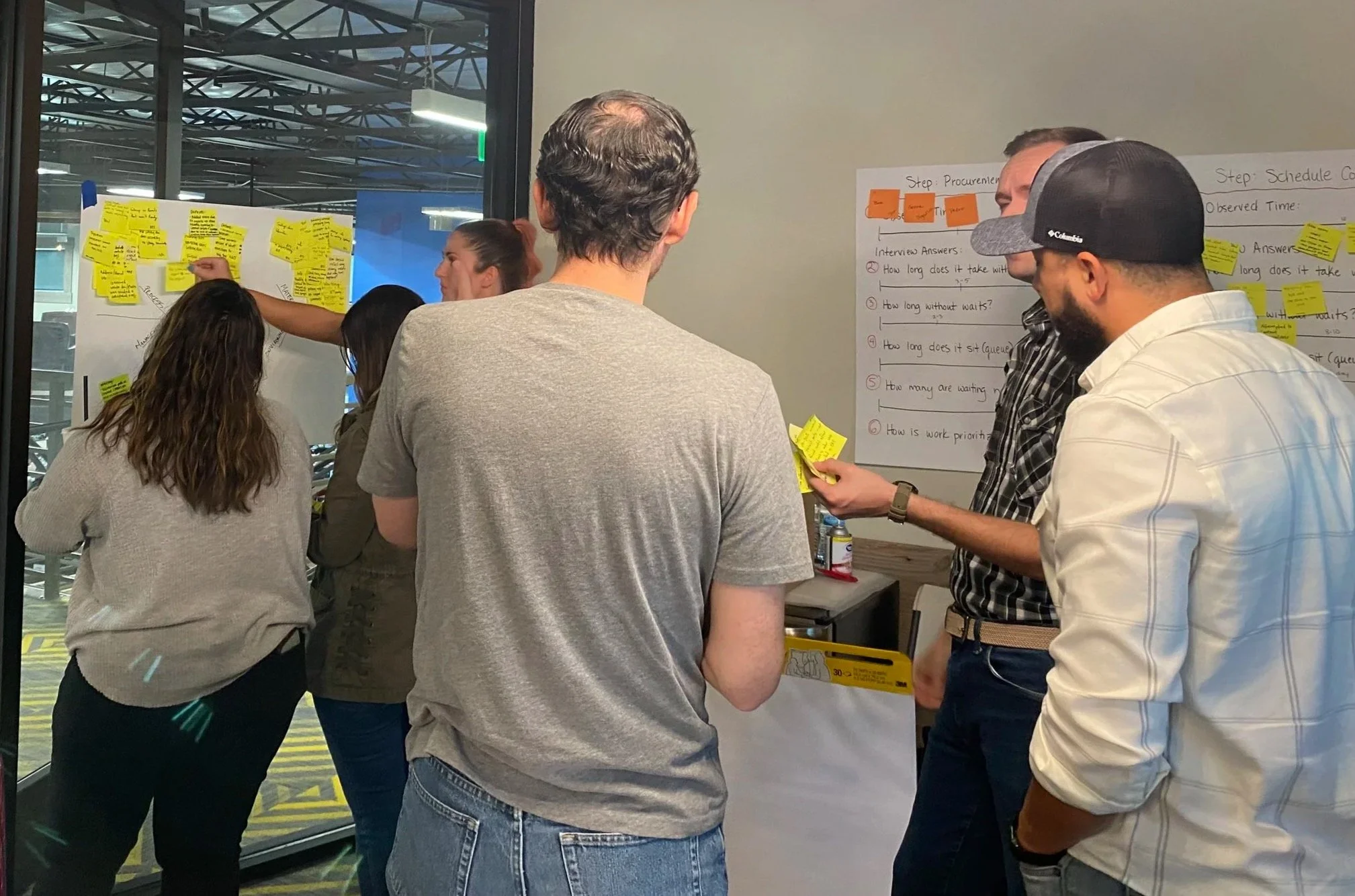
A challenge may require us to understand how a system behaves today while also considering how it could change tomorrow. We may need to understand people’s experiences, redesign a service, align stakeholders, improve a process, challenge assumptions, or identify where intervention could have the greatest effect.
That is why Empact Global works across disciplines.
Systems thinking helps us understand relationships, structures, and patterns.
Strategic foresight helps us explore emerging change and consider what could come next.
Human-centered design helps us understand the people experiencing the system and create with them rather than simply for them.
Continuous improvement helps turn ideas into better ways of working—and strengthens them over time.
The value is not in applying every methodology to every challenge.
It is in knowing which perspectives and approaches the problem requires.
“The challenge should determine the approach—not the other way around.”
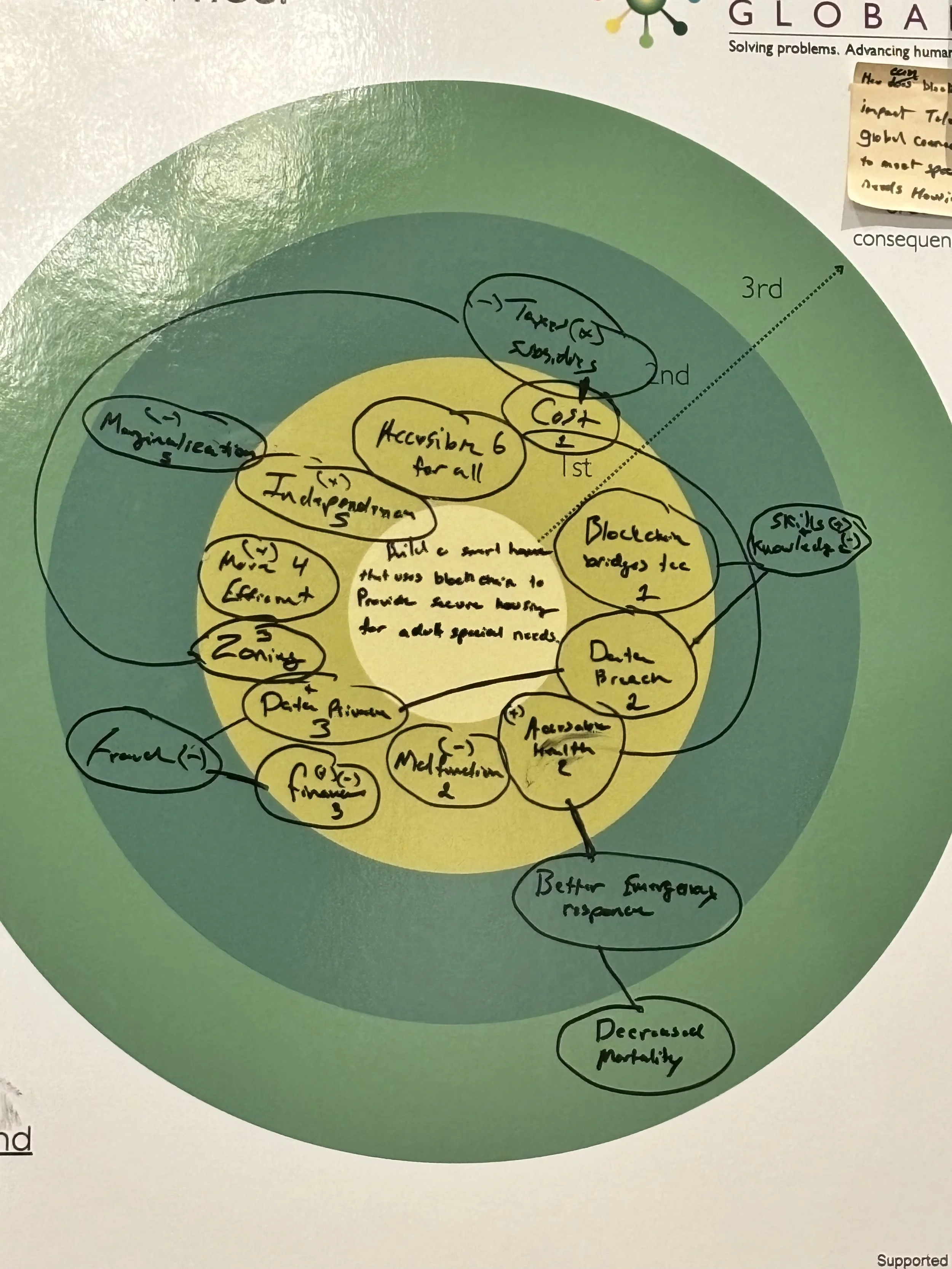
Mapping relationships and consequences across a system can reveal connections that are difficult to see in isolation.
Where sectors meet
Some challenges are too interconnected for any single organization to solve alone.
Government may influence policy, regulation, infrastructure, and scale. Businesses can bring technology, investment, operational capability, and innovation. Community organizations often understand needs and lived experiences that institutions can overlook. Researchers and academic institutions contribute evidence, inquiry, and new knowledge.
Each sees a different part of the system.
When those perspectives remain disconnected, organizations can unknowingly work around one another—or create solutions that address one need while creating challenges somewhere else.
When they come together intentionally, something different becomes possible.
We can begin to see the broader system.
We can identify competing assumptions and priorities.
We can uncover resources and capabilities that already exist.
And we can find opportunities that may be invisible from inside any single organization.
The intersections are where possibility lives
The hardest problems rarely respect organizational charts, professional disciplines, funding streams, or sector boundaries.
Neither do the possibilities.
Innovation often begins when we connect ideas, experiences, people, and systems that have traditionally been considered separately.
It happens when we stop asking only:
“How do we fix this part?”
and begin asking:
“What is this connected to?”
“What might we be missing?”
“Who else needs to be part of this?”
“What becomes possible if we look at the whole system differently?”
The future will not arrive in neat categories.
The challenges shaping health, education, communities, organizations, and society will continue to intersect—and the organizations best prepared to navigate them will be those willing to work across those intersections.
That is often where the most meaningful possibilities begin.
EXPLORE FURTHER
Working on a challenge that doesn’t fit neatly into one box?
Empact Global helps organizations understand complex systems, anticipate what’s next, and turn insight into meaningful change.